


Introduction
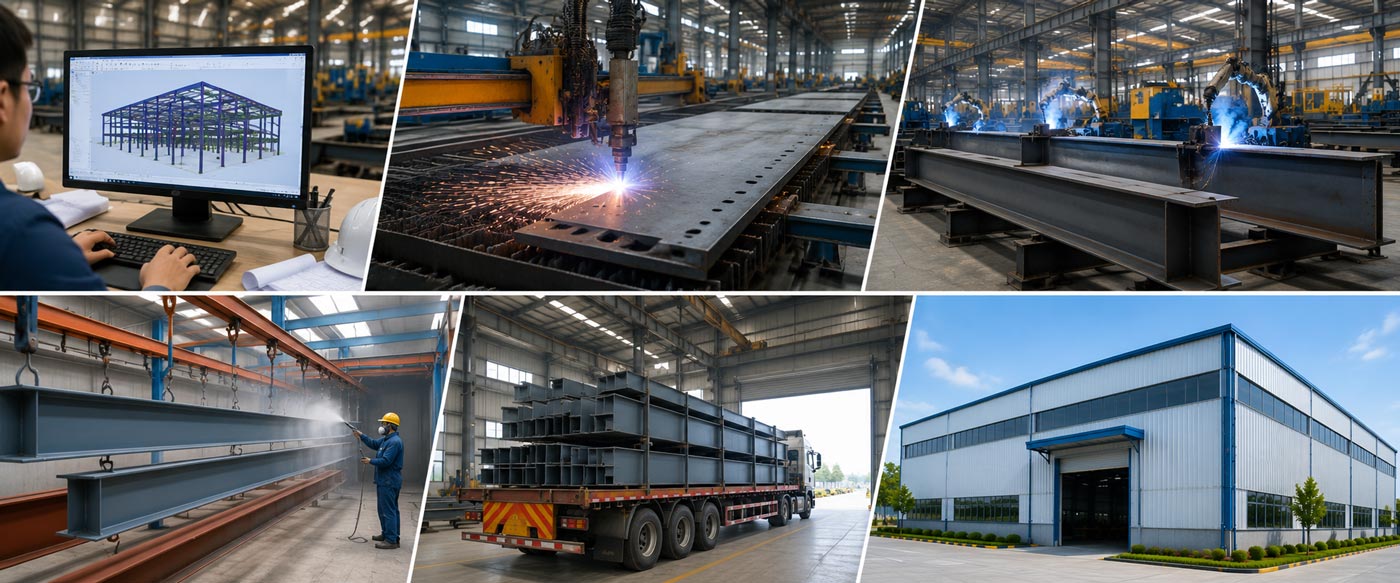
Pre-Engineered Buildings (PEB) have revolutionized modern construction by offering faster project completion, superior quality control, and cost-effective building solutions. Unlike conventional construction, where most activities take place on-site, PEB structures are manufactured in a controlled factory environment before being assembled at the project location.
Understanding how a Pre-Engineered Building is manufactured helps project owners, developers, and industrial businesses appreciate the precision engineering that goes into creating strong and durable steel structures. From design and fabrication to quality testing and delivery, every stage plays a critical role in ensuring project success.
What Is PEB Manufacturing?
PEB manufacturing is the process of designing, fabricating, and producing steel building components in a factory before transporting them to the construction site for installation. The manufacturing process follows strict engineering standards and quality control procedures to ensure every component fits perfectly during erection.
This approach minimizes construction delays, reduces material waste, and improves overall project efficiency.
Step 1: Project Requirement Analysis
Every PEB project begins with understanding the client’s requirements. Engineers evaluate several factors, including:
- Building dimensions
- Intended use
- Site location
- Wind loads
- Seismic conditions
- Crane requirements
- Roofing specifications
- Future expansion plans
This information forms the foundation of the engineering and design process.
Step 2: Structural Design and Engineering
Once project requirements are finalized, structural engineers create detailed building designs using advanced engineering software.
The design process includes:
- Structural calculations
- Load analysis
- Wind resistance calculations
- Seismic analysis
- Frame optimization
- Material selection
The objective is to develop a structure that is safe, durable, and cost-efficient while meeting all applicable standards.
Step 3: Preparation of Shop Drawings
After design approval, detailed shop drawings are prepared for manufacturing.
These drawings contain:
- Component dimensions
- Connection details
- Fabrication specifications
- Material requirements
- Assembly instructions
Shop drawings ensure that every steel component is fabricated with precision and accuracy.
Step 4: Steel Procurement
High-quality structural steel is sourced from approved suppliers. The quality of raw materials directly affects the strength, durability, and performance of the final structure.
Steel used in PEB manufacturing undergoes inspection to verify:
- Material grade
- Thickness
- Mechanical properties
- Surface condition
Only approved materials proceed to fabrication.
Step 5: Cutting and Fabrication
The fabrication stage is where raw steel is transformed into building components.
Modern manufacturing facilities use advanced equipment such as:
- CNC cutting machines
- Plasma cutting systems
- Automatic welding machines
- Drilling machines
- Plate processing equipment
These machines ensure consistent quality and precise dimensions throughout the fabrication process.
Step 6: Welding and Assembly
Fabricated steel sections are assembled and welded according to engineering specifications.
Special attention is given to:
- Weld quality
- Alignment accuracy
- Dimensional tolerances
- Structural integrity
Experienced fabrication teams and automated welding systems help maintain high production standards.
Step 7: Surface Preparation and Painting
Before protective coatings are applied, steel components undergo surface preparation to remove dirt, rust, and contaminants.
Common protection methods include:
- Primer coating
- Epoxy painting
- Polyurethane coating
- Galvanization
These treatments improve corrosion resistance and extend the lifespan of the building.
Step 8: Quality Inspection and Testing
Quality control is one of the most important stages of PEB manufacturing.
Inspection activities typically include:
- Dimensional verification
- Material testing
- Weld inspection
- Coating thickness checks
- Visual inspection
- Load requirement verification
Strict quality procedures ensure that every component meets engineering standards before shipment.
Step 9: Packing and Dispatch
Once fabrication and inspection are complete, components are carefully packed and labeled.
Each component receives identification markings that help installation teams quickly locate and assemble parts at the project site.
Proper packing minimizes transportation damage and improves site efficiency.
Step 10: Transportation to Site
The manufactured components are transported to the construction location using specialized logistics arrangements.
Because PEB structures are manufactured in sections, transportation becomes easier and more efficient than moving complete structures.
Proper planning ensures timely delivery and smooth project execution.
Step 11: Site Erection and Installation
After delivery, installation teams assemble the building using bolts and connection systems according to approved erection drawings.
The erection process generally includes:
- Foundation preparation
- Column installation
- Rafter installation
- Secondary member installation
- Roofing installation
- Wall cladding installation
- Finishing works
Because components are pre-manufactured, installation is significantly faster than conventional construction.
Advantages of Factory-Manufactured PEB Structures
The factory manufacturing process provides several advantages:
- Better quality control
- Faster project completion
- Reduced material waste
- Improved safety
- Lower labor requirements
- Consistent fabrication quality
- Cost-effective construction
- Faster return on investment
These benefits make PEB construction the preferred choice for industrial and commercial projects.
Industries Using Manufactured PEB Buildings
Pre-Engineered Buildings are widely used across multiple industries, including:
- Warehousing
- Logistics
- Manufacturing
- Pharmaceuticals
- Food processing
- Automotive
- Agriculture
- Retail
- Infrastructure
- Engineering
Their versatility allows businesses to develop customized facilities based on operational requirements.
Why Choose PEB Expert?
PEB Expert provides complete design, manufacturing, fabrication, and installation solutions for industrial and commercial steel buildings. Our modern fabrication capabilities, experienced engineering team, and strict quality control processes ensure every project is delivered with precision and reliability.
From warehouses and factory sheds to logistics parks and industrial facilities, we provide end-to-end PEB solutions tailored to your specific needs.
The manufacturing process of a Pre-Engineered Building combines advanced engineering, precision fabrication, and strict quality control to create durable and efficient steel structures. By manufacturing building components in a controlled environment, PEB companies can deliver faster construction, better quality, and significant cost savings compared to traditional construction methods. As industrial development continues to grow across India, factory-manufactured PEB structures remain one of the most reliable and efficient construction solutions available today.
Frequently Asked Questions
How are PEB buildings manufactured?
PEB buildings are manufactured in factories where steel components are designed, fabricated, welded, painted, inspected, and then transported to the construction site for assembly.
Why is factory fabrication important in PEB construction?
Factory fabrication ensures better quality control, faster production, accurate dimensions, and reduced material waste.
How long does PEB manufacturing take?
The manufacturing timeline depends on project size, but most industrial PEB projects are completed significantly faster than conventional construction methods.
Are PEB components manufactured off-site?
Yes. Most structural components are manufactured in specialized fabrication facilities before being transported for installation.

